
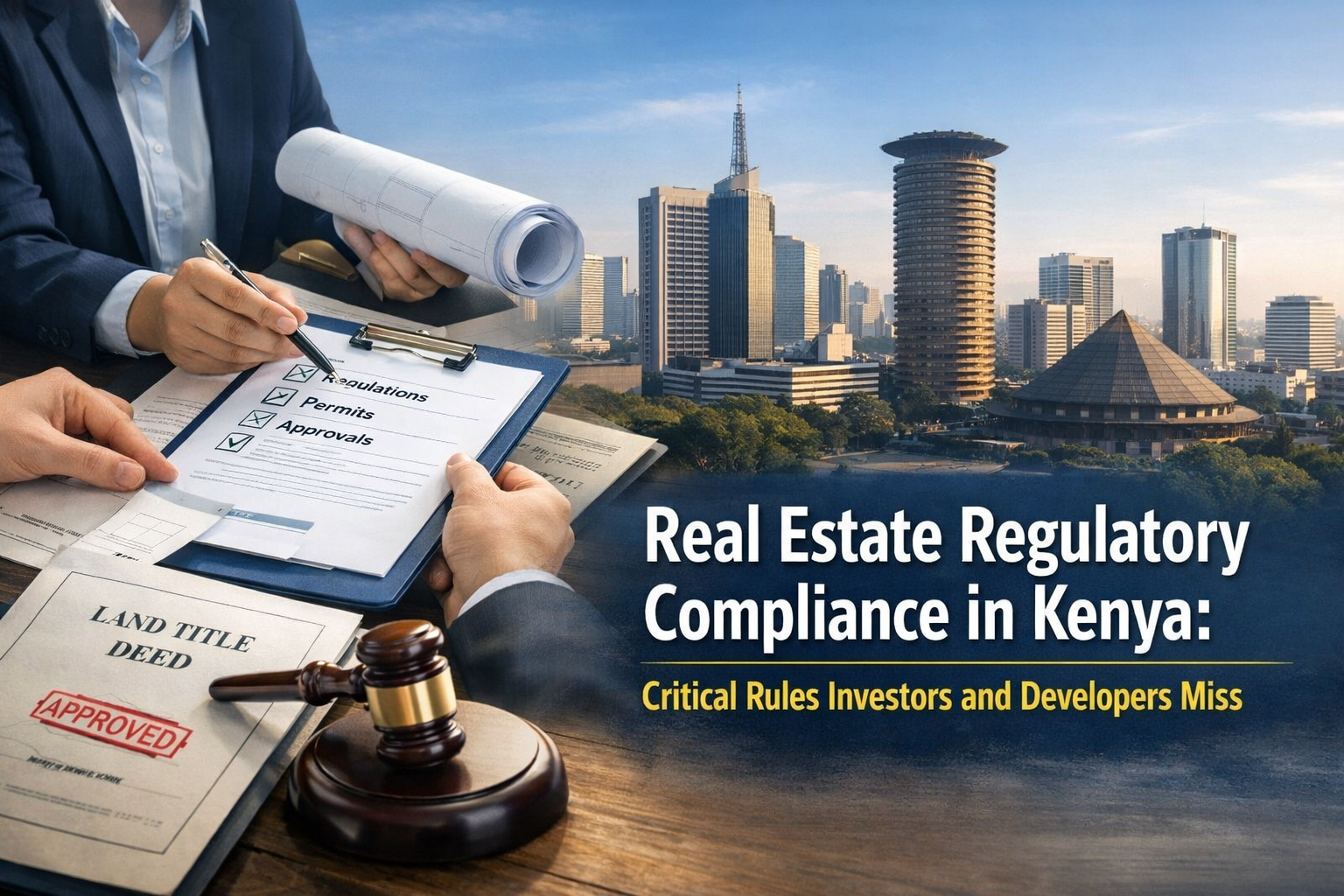
Real estate regulatory compliance in Kenya is a material investment and financing risk that can lead to transaction failure.
As investor interest grows across residential, commercial, and mixed-use developments, regulatory scrutiny has intensified. Licensing gaps, defective approvals, unverified land use permissions, and non-compliance with sector regulators increasingly lead to stalled projects, enforcement actions, and costly disputes.
In practice, these issues often surface after capital is committed, when remediation options are limited and costly.
This article explains what real estate regulatory compliance in Kenya covers, the regulatory risks investors frequently overlook, and how early, structured legal oversight helps protect capital, timelines, and long-term asset value.
What Compliance and Regulatory Law in Kenya Covers in Practice
Compliance and regulatory law in Kenya governs how businesses operate within the country’s legal and regulatory framework. It sets the legal standards businesses must meet to conduct operations lawfully, manage regulatory risk, and remain accountable to oversight authorities.
In practice, compliance operates on two distinct but interconnected levels. Operational compliance covers statutory filings and company registrations overseen by the Business Registration Service (BRS), licences and approvals from sector regulators, and land or property approvals via Ardhisasa / Ministry of Lands. It also covers ongoing reporting obligations, ensuring businesses remain accountable and up-to-date with regulatory requirements.
Strategic compliance goes further. It examines how a business is structured, governed, and monitored to identify regulatory exposure before it escalates into enforcement action or operational disruption.
Most compliance failures stem from weak legal structuring, inadequate controls, or treating compliance as a one-off exercise rather than ongoing risk management.
Why Compliance Matters More Than Ever in Kenya
Kenya’s regulatory environment has tightened significantly in recent years. Enforcement is no longer reactive or fragmented.
Regulators are increasingly data-driven, more coordinated across agencies, and quicker to impose penalties for non-compliance.
For businesses, the implications are direct. Ignorance is no defence. Delays attract sanctions. Informal shortcuts that once went unnoticed now trigger audits, licence suspensions, or enforcement action.
Compliance protects growth, investor confidence, and operational continuity in Kenya’s closely monitored regulatory landscape.
Common Compliance Risks Businesses Overlook
Many businesses assume compliance ends once they are registered. That assumption is costly. In reality, real estate regulatory compliance in Kenya and broader corporate compliance obligations are ongoing, and gaps can expose companies to fines, reputational damage, or operational disruptions.
Commonly overlooked compliance risks include:
- Expired licences and permits: Businesses often fail to track renewal dates for sector-specific approvals or municipal permits, creating unintentional violations.
- Failure to file annual statutory returns: Skipping filings with regulators such as the Registrar of Companies and the Kenya Revenue Authority (KRA) exposes businesses to penalties, audits, and enforcement action.
- Non-compliance with sector regulators: Every industry in Kenya, from real estate to finance, has sector-specific rules that must be monitored continually.
- Weak corporate governance structures: Poorly defined decision-making authority or internal controls increases the risk of violations.
- Incomplete record-keeping and documentation: Missing contracts, licenses, or statutory registers can derail audits or enforcement inspections.
In highly regulated industries, such as real estate development or property investment, the exposure is particularly high. Early, structured legal guidance can prevent compliance lapses before they escalate. This is why businesses increasingly engage expert support under Compliance and Regulatory Law at CR Advocates LLP.
Reactive fixes rarely undo regulatory damage once enforcement begins. By proactively identifying and addressing risks, businesses safeguard operations, investor confidence, and long-term growth.
Compliance and Property Transactions in Kenya
Compliance intersects directly with property ownership, development, and investment, making sector-specific oversight essential.
Common property-related compliance issues include:
- Regulatory approvals
- Zoning and land-use compliance
- Registration and perfection of interests
- Statutory consents and clearances
Regulatory compliance in property matters is often best managed alongside guidance from experienced property lawyers in Kenya. In practice, compliance gaps typically surface during due diligence, financing, or regulatory inspections, when corrective options are limited and timelines are tight.
Stay Ahead of Regulatory Risk
Early compliance review can prevent costly delays and protect long-term investments. Learn how CR Advocates LLP guides developers and investors through operational and strategic compliance in Kenya.
How Legal Advisors Reduce Compliance Risk
A competent legal advisor in Kenya does more than file statutory documents. For real estate regulatory compliance in Kenya, proactive guidance can prevent costly delays, fines, or transactional disputes.
Advisors typically:
- Assess regulatory exposure – identify legal gaps in property ownership, development, and investment before enforcement issues arise.
• Design compliant legal structures – structure transactions and ownership to meet statutory requirements and protect investor interests.
• Monitor ongoing obligations – ensure licences, approvals, and reporting remain current to avoid penalties.
• Anticipate regulatory changes – stay ahead of amendments from land authorities, local councils, and sector regulators.
• Advise before risks escalate – provide early intervention during due diligence, financing, or inspections to prevent stalled transactions.
This proactive approach separates legally resilient property investors from reactive ones. For guidance on safeguarding investments and maintaining real estate regulatory compliance in Kenya, experienced Property Lawyers in Kenya and Compliance and Regulatory Law experts at CR Advocates LLP provide structured, sector-specific support tailored to Nairobi and coastal markets.
Frequently Asked Questions on Real Estate Regulatory Compliance in Kenya
Q1: What is real estate regulatory compliance in Kenya?
Real estate regulatory compliance in Kenya refers to meeting all legal, statutory, and regulatory requirements governing property ownership, development, and investment. This includes land use approvals, development permissions, registration of interests, tax compliance, and adherence to sector-specific regulations enforced by land and planning authorities.
Q2: What happens if a real estate project is not compliant in Kenya?
Non-compliance can result in stalled transactions, revoked approvals, enforcement action by regulators, financial penalties, or invalidation of ownership interests. In serious cases, projects may be suspended or demolished, and investors may face prolonged legal disputes or capital losses.
Q3: How can investors confirm regulatory compliance before buying property in Kenya?
Investors should conduct structured legal due diligence covering title verification, zoning and land-use approvals, statutory consents, registration status, and compliance with sector regulators. Engaging experienced legal counsel early helps identify compliance gaps before capital is committed.
Q4: Do I need a lawyer for real estate regulatory compliance in Kenya?
Yes. Real estate compliance involves overlapping legal, regulatory, and administrative requirements. A qualified lawyer ensures approvals are valid, statutory obligations are met, and transactions are structured to protect ownership rights and investment value.
Q5: Which real estate transactions carry the highest compliance risk in Kenya?
High-risk transactions include land acquisitions for development, mixed-use projects, coastal properties, leasehold conversions, and properties involving multiple regulators or foreign investors. These transactions often trigger enhanced regulatory scrutiny and require careful legal oversight.
Final Thoughts: Protecting Property Investments Through Compliance
Real estate regulatory compliance in Kenya is no longer optional or secondary. It directly affects project viability, investor confidence, and long-term asset value. Most regulatory failures do not arise from fraud, but from overlooked approvals, weak structuring, or delayed legal review.
For investors and developers, the safest approach is proactive compliance backed by experienced legal guidance. Early intervention reduces risk, preserves timelines, and protects capital before regulatory exposure becomes irreversible.
Real estate regulatory compliance is complex and evolving. Early, structured legal oversight can protect investments and prevent costly disputes. See how CR Advocates LLP, trusted by developers and investors across Nairobi and the